


Sonic Runners Adventure game
Gameloft SE
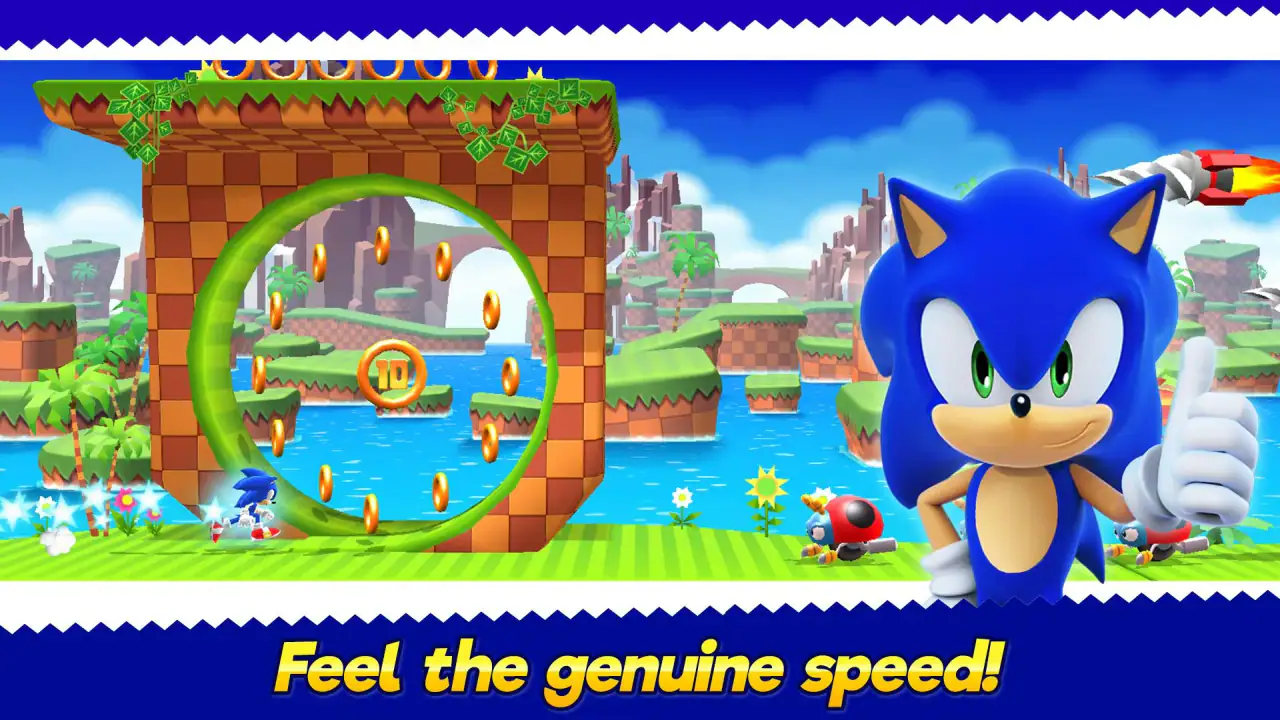
I approached Sonic Runners Adventure as a compact mobile adventure game rather than expecting a full console-style Sonic experience. Its basic appeal is easy to understand: Sonic runs through platforming stages, and I guide him through jumps, hazards, and changing terrain. That simple setup makes it approachable, but it also means the game depends heavily on how satisfying its movement feels over repeated attempts.
My first impression was that this is best suited to short, focused sessions. It is the kind of game I can open when I have a few minutes, play a handful of levels, and put down without needing to remember a complicated story or a large control scheme. Gameloft SE developed it, and the game sits in the adventure category with an Everyone age rating, so its presentation is clearly aimed at a broad audience rather than a niche group of experienced players.
The purchase context matters here. The game is listed at $2.99, which gives it a different starting point from many free mobile runners. I find that useful when deciding what to expect: I am evaluating a paid game, not a free download built around constant prompts to spend. At the same time, the price alone does not guarantee that every player will enjoy the design. A runner can still feel repetitive if its stages do not offer enough variety, and a platformer can still be frustrating if its timing is too strict for touch controls.
How the running and platforming actually feel
The central idea is direct. Sonic moves through a level while I concentrate on getting him over gaps, onto platforms, and past obstacles. That creates a different rhythm from a traditional side-scrolling platformer where I freely control every step. Here, the challenge comes from reading the route quickly and making the right jump at the right moment.
That distinction is important for new players. If you are looking for a game where Sonic can stop, turn around, and explore every corner at your own pace, this is not the best match. The running structure pushes me forward, so mistakes often come from reacting too late rather than from not knowing where to go. I had to learn to watch the next section of the level instead of staring only at Sonic.
Related News






I found that the most useful habit is to treat each attempt as a short lesson. On the first run, I look for the timing of the jumps and the placement of hazards. On the next, I try to act earlier and keep my attention on the route ahead. This approach makes failure feel more useful than it would in a game where the same mistake gives no information. It also reduces the temptation to rush through a difficult section simply because Sonic is already moving quickly.
The touch format makes this kind of design accessible, but it also introduces friction. A physical controller gives my fingers a clear sense of direction and timing. On a phone, the screen is less forgiving, especially when I am holding the device differently from one session to the next. A jump that feels easy when I am sitting still can feel less reliable when I am playing while standing on a train or walking between tasks.
For that reason, I would play it with both hands whenever possible. Keeping the phone steady makes the visual cues easier to read and helps me avoid accidental inputs. That sounds obvious, but it is one of the practical differences between enjoying a runner and blaming the game for every failed jump.
Gallery
Why short sessions work better than long marathons
The game fits naturally into brief breaks. I can play while waiting for an appointment or during a quiet moment at home, because the basic objective is immediately clear. There is no large inventory to organize before starting and no elaborate setup needed to understand what I am doing.
Longer sessions are more dependent on personal tolerance. Repeating the same type of movement for too long can make the action feel less exciting, particularly if I am trying to clear one section after several failed attempts. I recommend taking a break when my reactions become impatient. In a fast platformer, impatience usually causes me to jump early, and that creates a cycle where frustration makes the next attempt worse.
A useful everyday routine is to separate progress sessions from practice sessions. During a progress session, I play until I reach a natural stopping point. During a practice session, I replay the early parts of a level with the specific goal of improving my timing. This keeps the game from becoming an all-or-nothing test and gives repeated attempts a clearer purpose.
Progress, difficulty, and the pressure to keep trying
The strongest pressure in a runner comes from the desire to improve the previous attempt. Even without turning the experience into a long role-playing system, a difficult platforming section can make me think, “I know what I did wrong; I can do that better next time.” That is a good kind of pressure when the controls feel consistent.
The less enjoyable side appears when a mistake feels caused by the screen rather than by my decision. Mobile games need to communicate danger quickly, because there is little room for hesitation. I pay close attention to whether the game gives me enough visual warning before a jump or obstacle. When it does, failure feels fair. When it does not, repeating the section starts to feel like memorization rather than skill.
My advice is not to judge the game by the first few failed attempts. Runners often feel awkward until the player understands their visual language. Look for the shape of the next platform, notice when the level begins to accelerate your decision-making, and use the earliest part of a stage to settle into the timing. If the controls still feel unpredictable after that adjustment, the game may simply not suit your preferred style.
The listed current version is 1.0.4a, and the minimum operating system is Android 7.0. Those details make the game viable for a range of older Android devices, but compatibility is not the same as comfort. A phone may run the game while still offering a smaller display or less convenient touch response than a newer model. I would think about screen size and physical handling before deciding whether it is suitable for a child or for frequent travel play.
Fairness, spending, and what a buyer should expect
Because the game has a listed purchase price, I approach it differently from a free runner. The initial decision is simple: pay the stated amount, install the game, and see whether Sonic’s platforming style is something I want to keep playing. That is a clearer starting point than downloading a free title and discovering later that the most comfortable experience depends on repeated purchases.
I would still avoid assuming that a paid download automatically means unlimited content, no interruptions, or a particular progression model. Those are separate questions. The sensible way to judge the purchase is to focus on whether the core running and jumping is enjoyable enough to justify the upfront cost. If I already know I like Sonic-style platforming and prefer a direct paid entry, the price feels easier to understand. If I only want an occasional casual game, even a small purchase may be unnecessary.
Spending fairness also depends on the player’s expectations. Someone choosing this for a child may value the simple age rating and the recognizable character, but should still try the opening experience personally. A child who enjoys quick movement and retrying levels may find it exciting. A child who prefers open exploration, creative building, or slower puzzle solving may lose interest quickly, regardless of the character on the screen.
I would not buy it because of the store numbers alone. The game has an average rating of 4.4 from around 13 thousand ratings, and it has passed 100 thousand installs, which suggests that many players have found it worthwhile. Those figures provide useful context, but they cannot tell me whether the touch controls fit my hands or whether the pacing matches my habits. A popular runner can still be the wrong purchase for someone who dislikes repeated timing challenges.
Is the competition fair?
This is not a competitive multiplayer review in the usual sense. The main contest is between my current attempt and my previous performance. That makes fairness less about defeating another player and more about whether the game rewards observation, timing, and practice instead of pushing me toward spending.
From that perspective, the paid entry is reassuring because the game does not present itself as a free download that needs constant financial attention before I can begin. I can evaluate the platforming on its own terms. The important trade-off is that a paid game has less room for excuses: if the levels feel repetitive or the controls do not respond as I expect, I cannot point to a free entry model as compensation.
For players who want a deep competitive ladder, live events, or a large social community, I would choose another type of mobile game. This experience is more personal and self-contained in spirit. It suits someone who wants to improve through repetition, not someone who needs a constantly changing contest against other people.
One practical fairness test is to notice what causes a failure. If I can explain it clearly—“I jumped late,” “I watched Sonic instead of the next platform,” or “I reacted to the wrong route”—then the retry has value. If I cannot tell why the attempt failed, I become less willing to repeat it. That test helps me decide whether I am facing a genuine skill challenge or simply a control problem.
What I would check before installing
The game was released on December 20, 2017, so I would approach it as an older mobile release rather than expecting the presentation or design conventions of a recent platformer. That is not automatically negative. Older games can be appealing precisely because they are focused, but it does mean modern players should not assume every current mobile convenience is present.
I would also check the device I plan to use, especially if it is an older Android phone. The minimum requirement of Android 7.0 is helpful, but the playing experience still depends on the display, touch response, available storage, and general condition of the device. Those are practical considerations for any action game, and they matter more when success depends on quick reactions.
Another question is whether I want a Sonic game specifically or simply a free platformer. If I am comparing it with free endless runners, the paid model may be attractive because I can start with a clearer purchase decision. If I am comparing it with a traditional platformer, the automatic forward movement may feel restrictive. If I am comparing it with a modern online game, it may seem less socially active. The right alternative depends on which part of the experience I value most.
I would also decide where I expect to play. At home, I can hold the phone securely and give the levels my full attention. During a commute, interruptions and movement make precise jumps harder. The game can fit travel, but I would not call it ideal for distracted play. Its short-session format is convenient; its timing demands are not always forgiving.
My trust verdict after weighing the trade-offs
My honest view is that Sonic Runners Adventure makes the most sense for players who want a straightforward Sonic-themed adventure game built around running and jumping. I like the immediacy: I can understand the objective quickly, improve through repeated attempts, and use it in short bursts without learning a complicated system first.
The purchase price gives the game a clear advantage for people who prefer paying once at the starting point rather than entering a free-to-play loop. Still, I would keep expectations measured. A paid download does not remove the basic limitations of a mobile runner. The experience remains dependent on touch accuracy, visual timing, and the player’s willingness to replay sections that were almost successful.
My most important recommendation is to treat it as a focused platforming game, not as an all-purpose mobile adventure. It is a good choice for a Sonic fan who enjoys learning routes and improving reactions. It is less suitable for someone who wants exploration, long narrative sessions, relaxed controls, or a competitive online community. Those players would probably be happier with a different genre or with a platformer designed around free movement.
The broad audience suggested by the Everyone rating is another positive, particularly for families looking for a recognizable character and uncomplicated action. Even so, I would play alongside a younger user at first. That lets me see whether the pace feels exciting or overwhelming and whether the child enjoys retrying levels instead of becoming discouraged by missed jumps.
After considering the age, the Android requirement, the paid entry, and the game’s focus on quick platforming, I see it as a modest but understandable purchase rather than a universal recommendation. Its best quality is clarity: I know what I am buying and what kind of play it offers. Its biggest risk is also clear: if the movement does not click with my hands, the limited structure leaves little else to carry the experience.
My final recommendation is conditional but positive: choose it if you want Sonic, short platforming sessions, and a direct paid game. Skip it if you need deep exploration, modern online competition, or a forgiving experience that can be played while distracted. For the right player, the satisfaction comes from turning a failed run into a cleaner one, and that focused loop is enough to make this small adventure worth considering.
FAQs for Sonic Runners Adventure game
What is Sonic Runners Adventure?
Sonic Runners Adventure is a side-scrolling platform game featuring Sonic and other familiar characters from the Sonic universe. You run through colorful levels, collect rings, defeat enemies, avoid traps, and use character abilities to keep moving at high speed. The game is designed for mobile play, with simple controls that are easy to learn but still require timing and quick reactions.
Is Sonic Runners Adventure free to download and play?
Availability and pricing can depend on the platform, region, and current store listing. Sonic Runners Adventure may be offered as a paid download or through a version with optional purchases, so it is important to check the Google Play Store or Apple App Store before installing. Review the listing carefully for in-app purchases, advertisements, supported devices, and any age or account requirements.
Can Sonic Runners Adventure be played offline?
Much of the core running and platforming experience can generally be enjoyed without a constant internet connection, which is useful when traveling or playing with limited data. However, certain features may require online access, including downloading game content, verifying the license, viewing advertisements, receiving updates, or using connected services. Testing the game once online before going offline is recommended.
What are the controls and gameplay like?
The game uses touch-based controls created for mobile devices, allowing you to guide Sonic through fast-moving stages, jump over obstacles, defeat enemies, and collect items. Although the controls are straightforward, the increasing speed makes precise timing important. Players who enjoy quick reflex challenges and replaying levels to improve their performance will likely find the gameplay more rewarding.
Which devices are compatible with Sonic Runners Adventure?
Compatibility depends on the specific Android or iOS version, device hardware, and the requirements shown on the official store page. Older phones and tablets may not support the game properly or may experience slower performance, crashes, or control issues. Before downloading, check the listed operating-system requirements, available storage, and recent user reviews for your particular device.
Pros
- Fast
- responsive controls make running and jumping feel smooth.
- Familiar Sonic characters and power-ups add nostalgic appeal.
- Short levels work well for quick gaming sessions.
- Bright visuals and energetic music suit the Sonic universe.
- Playable offline
- making it convenient during travel or commutes.
Cons
- Some stages require repeated attempts to learn obstacle patterns.
- The fixed running format offers less freedom than classic Sonic games.
- Difficulty can increase sharply in later levels.
- Touch controls may feel cramped on smaller phone screens.
- The game can use considerable battery during longer sessions.


